Learning, Building Power, and Taking Action: GMWC Attends Nonviolent Direct Action Training
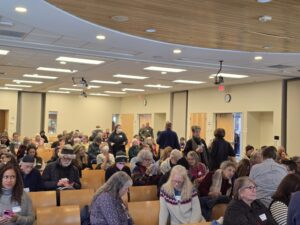
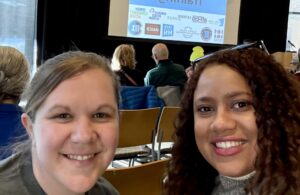
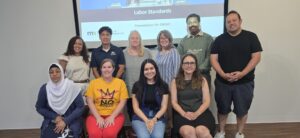
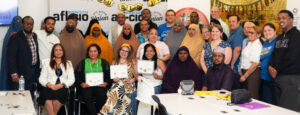
In December, team members from the Greater Minnesota Worker Center (GMWC) had the opportunity to participate in a Nonviolent Direct Action Training alongside community organizers, labor leaders, advocates, and grassroots activists from across Minnesota.
We are deeply grateful to the incredible coalition of organizations that came together to host this important training, including Gender Justice, the Immigrant Defense Network, Indivisible Twin Cities, Jewish Community Action, Minnesota 50501, the MN AFL-CIO, the Minnesota State Retiree Council (AFL-CIO), the Saint Paul Regional Labor Federation (AFL-CIO), TakeAction Minnesota, and Women’s March Minnesota.
The training provided participants with valuable skills, historical context, and practical tools for engaging in effective, strategic, and nonviolent collective action. It also created space for relationship-building across movements, strengthening the connections that are essential for creating lasting social change.
Why Nonviolent Direct Action Matters
Throughout history, nonviolent direct action has played a critical role in advancing civil rights, labor rights, immigrant rights, voting rights, and countless other movements for justice. From workers organizing for safer workplaces to communities advocating for human dignity and equal treatment, collective action has often been necessary to bring attention to urgent issues and create meaningful change.
The training explored how communities can organize safely, strategically, and effectively while centering principles of nonviolence, solidarity, and mutual respect. Participants gained tools for planning actions, building community support, understanding legal considerations, and strengthening movement infrastructure.
For organizations like GMWC, these skills are invaluable. Workers across Greater Minnesota continue to face challenges including unsafe working conditions, wage theft, discrimination, and threats to immigrant communities. Building worker power requires not only organizing within workplaces but also understanding how broader community movements can work together to advocate for justice.
Building Stronger Coalitions
One of the most inspiring aspects of the training was seeing organizations from different sectors come together around shared values and common goals. Labor organizations, immigrant rights advocates, faith-based organizers, women’s rights groups, and community leaders all contributed their experiences and perspectives.
This kind of collaboration is essential. The challenges facing workers and immigrant communities are interconnected, and lasting solutions require strong partnerships across movements.
At the Greater Minnesota Worker Center, we believe that solidarity is one of our greatest strengths. When workers, advocates, community organizations, and allies unite around a common vision, we create the collective power needed to challenge injustice and build a more equitable future.
Gratitude to the Organizers
We extend our sincere appreciation to all of the organizations that made this training possible. Their commitment to leadership development, civic engagement, and community empowerment helps strengthen movements throughout Minnesota.
By investing in education and training opportunities like these, they are helping equip community members with the knowledge and skills necessary to advocate for themselves, support their neighbors, and create positive change.
Looking Forward
As GMWC continues our mission of organizing workers and building power throughout Greater Minnesota, we carry forward the lessons learned from this training. We are excited to apply these skills in support of workers, immigrant communities, and broader efforts to advance economic and social justice.
The future of our movements depends on strong relationships, courageous leadership, and a shared commitment to collective action. Trainings like this remind us that we are part of something larger—a growing network of people and organizations working together to create communities where everyone can live and work with dignity.
We are proud to stand alongside our partners and look forward to continuing this important work together.
In solidarity,
Greater Minnesota Worker Center